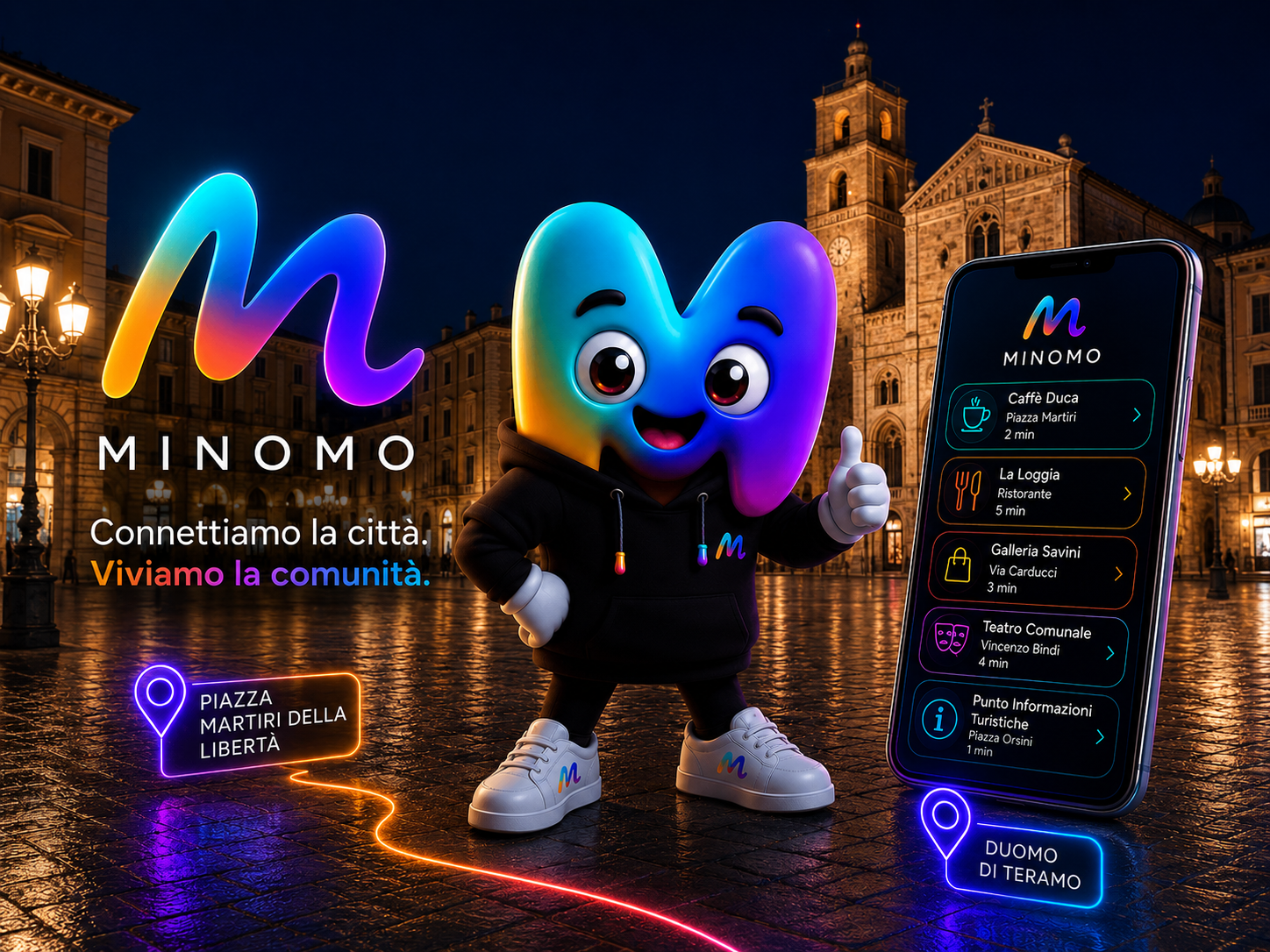
A small restaurant in Teramo, Italy, spends two years building an audience of three thousand followers on social media. One Tuesday evening, with the place nearly empty, it posts a special offer. The message reaches only a few dozen people. To reach everyone else — people who consciously chose to follow that business — the owner has to pay.
This is not a malfunction. It is the business model of the platforms to which we have handed over, without any negotiation, the whole of local commercial communication.
We call it “the algorithm tax”: the price a merchant has to pay to win back access to their own audience. We built the audience, we convinced them to click “follow”, only to discover that this audience does not belong to us. It belongs to the platform, which decides how much of it we are allowed to touch, and bills us for the difference.
Organic reach didn’t decline. It was withdrawn.
Over the past decade, the organic visibility of a social media post has collapsed: from near-total coverage of a page’s followers to a percentage that, by industry estimates, rarely exceeds a handful of points. In parallel, the cost of advertising has risen steadily. The two movements are not independent: each feeds the other. The less you see of what you built, the more you pay to make up for it.
For a multinational, this is a line in a budget. For a pizzeria, a hair salon or a neighbourhood shop, it is the difference between a full evening and a lost one. It is a dependency with no way out, because the audience remains hostage on someone else’s ground.
The problem isn’t the cost. It’s ownership.
The debate usually focuses on advertising efficiency. We believe it misses the real point. The question is not how expensive it is to reach your customers, but who those customers belong to.
Today, the relationship between a local business and its community runs through an intermediary that monetises it at every step, profiles its behaviour, and can throttle it at any moment by changing a rule that no one voted on. The data about a city’s citizens — what they consume, where they go, what interests them — is extracted and turned into value elsewhere, under another jurisdiction.
Here the discussion inevitably becomes European. Not out of love for regulation, but because the alternative to an extractive model cannot be merely a promise of compliance: it has to be an infrastructure designed differently from the ground up.
The alternative: direct, sovereign communication with no middlemen
The premise we started from is simple: a business must be able to reach the people who chose to follow it, in full, without paying a toll and without handing anyone’s data to a third party.
Technically, this translates into push notifications delivered straight to the user’s phone — a channel where delivery is not filtered by an algorithm and where open rates far exceed the meagre organic reach. It means using the technologies we already have, intelligently. An infrastructure hosted entirely within the European Union, with no tracking cookies or behavioural profiling — not as a marketing gimmick, but as an architectural choice.
Why the city matters as much as the merchant
What makes a platform useful for an entire city is not just the offer of a single shop, but the life of the territory: events, fairs, concerts, festivals.
The chain is direct. A published event draws people into the app. Once there, users discover the merchants, the offers, the maps. The merchant watches their community grow and starts to communicate with it directly. The more people are active in the city, the more value every message gains — and the less justifiable the tax paid elsewhere becomes.
For a local administration, the stakes are higher still. The digital space in which citizens experience their city is no longer optional. The question is not whether a community will have a digital presence, but whether that presence will be locally and European-owned — or rented, indefinitely, from someone who answers to no one here.
Who owns the connection?
We believe the coming decade will separate two categories: those who own the relationship with their community, and those who will keep renting it, paying an ever-higher tribute for ever-more-limited access.
A restaurant that builds its audience once and keeps it has a different future from one that pays, month after month, to see its own customers again. A city that owns its own digital infrastructure has a different future from one that leaves it in the hands of a foreign algorithm.
The “algorithm tax” has been, until now, the hidden cost of not having asked ourselves the right question. The time has come to ask it.