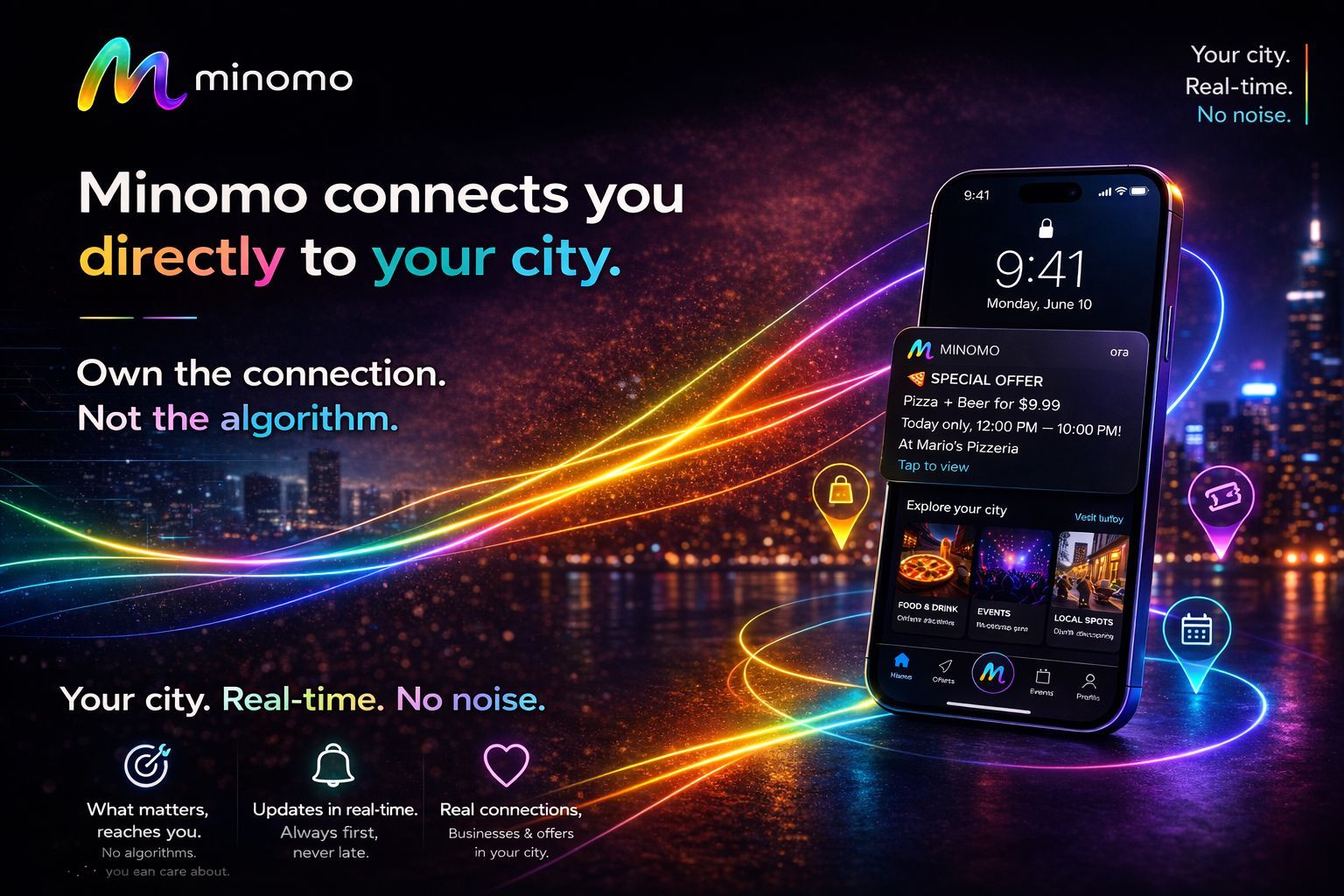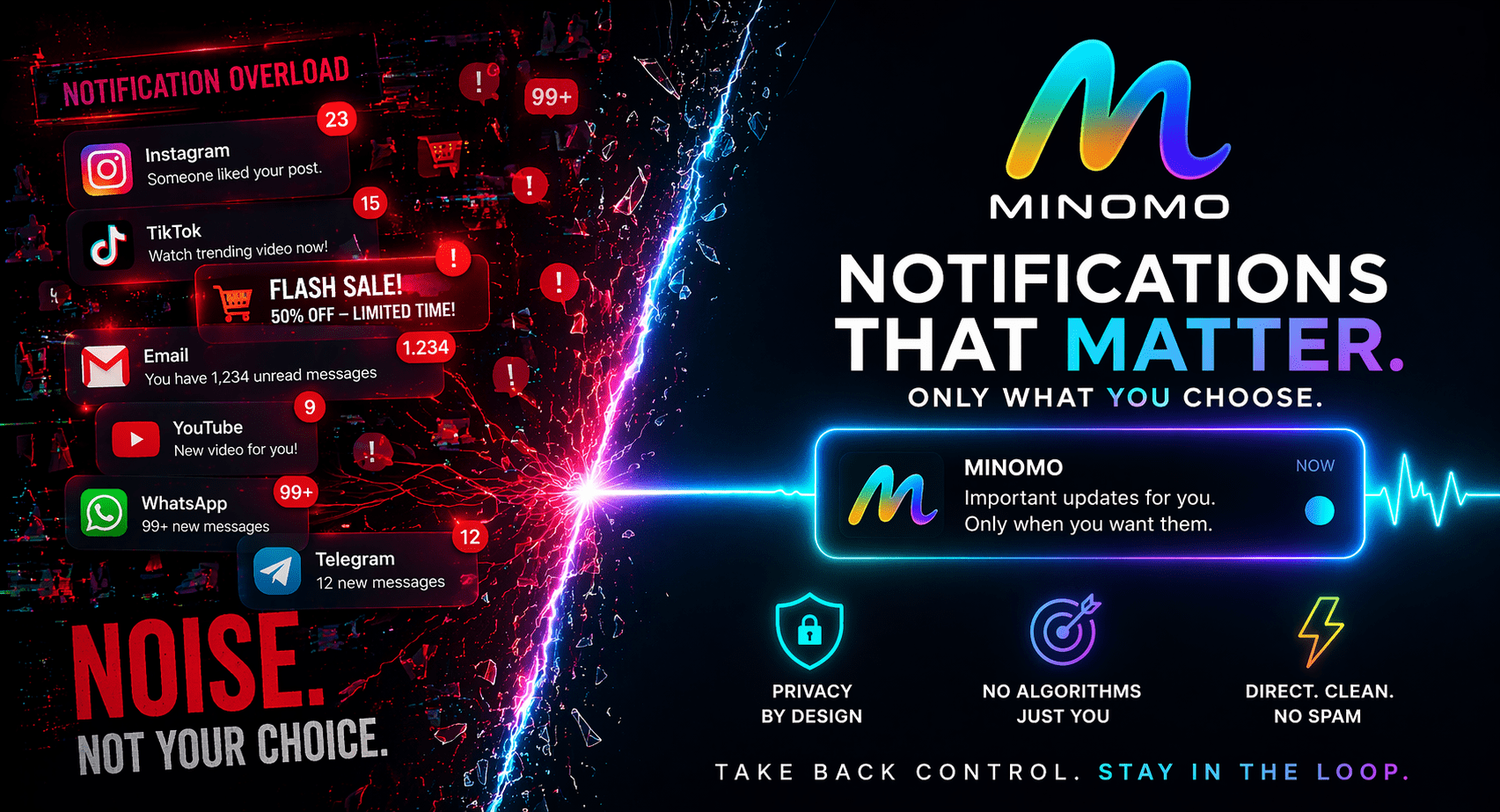
Here's a modern absurdity worth sitting with: you can watch, in real time, what an influencer is eating on the other side of the world — but you have no idea that the bakery downstairs just pulled a fresh batch of croissants out of the oven.
We've been trained to treat our screens as windows onto distant worlds, while the actual windows in our homes have gone dark. This isn't an accident. It's a business model.
For a local merchant, the fifty meters between their shop and their customer has become the most expensive stretch of real estate in the history of marketing. This is the algorithm tax in its purest form: you pay a global corporation for the privilege of being visible in your own neighborhood.
2021–2025: From "Guide" to "Infrastructure"
MINOMO Merchant wasn't born from a desire to build another app.
Our roots go back to 2021, when we began exploring the concept of a "virtual city guide." But as we studied the long track record of failed Smart City initiatives and local directories, a simple truth emerged: the problem was never a shortage of information. It was a failure of access.
By 2025, combining analytical depth with international entrepreneurial execution, we reached a clear conclusion: cities don't need another guide. They need a digital nervous system.
We transformed MINOMO Merchant from a utility into a direct communication infrastructure. Not as an experiment — as a strategic decision.
The UX Obsession: Why Ideology Never Beats Experience
A PWA — a Progressive Web App — is, in theory, enough. It's fast, accessible, and removes every barrier: scan a QR code and you're in within five seconds.
Early on, we believed this was the complete answer. But maturity means accepting that ideology never wins against user experience.
For the user, the PWA means instant access. A native app means fluidity, stability, and the kind of natural return behavior that no amount of re-engagement campaigns can manufacture. When we studied how people — especially iPhone users — actually behave, the conclusion was clear: we need to be where users feel at home.
The decision to build PWA and native iOS and Android applications in parallel isn't a compromise. It's a strategy.
Speed for acquisition. Quality for retention. That's what we call Hybrid Supremacy.
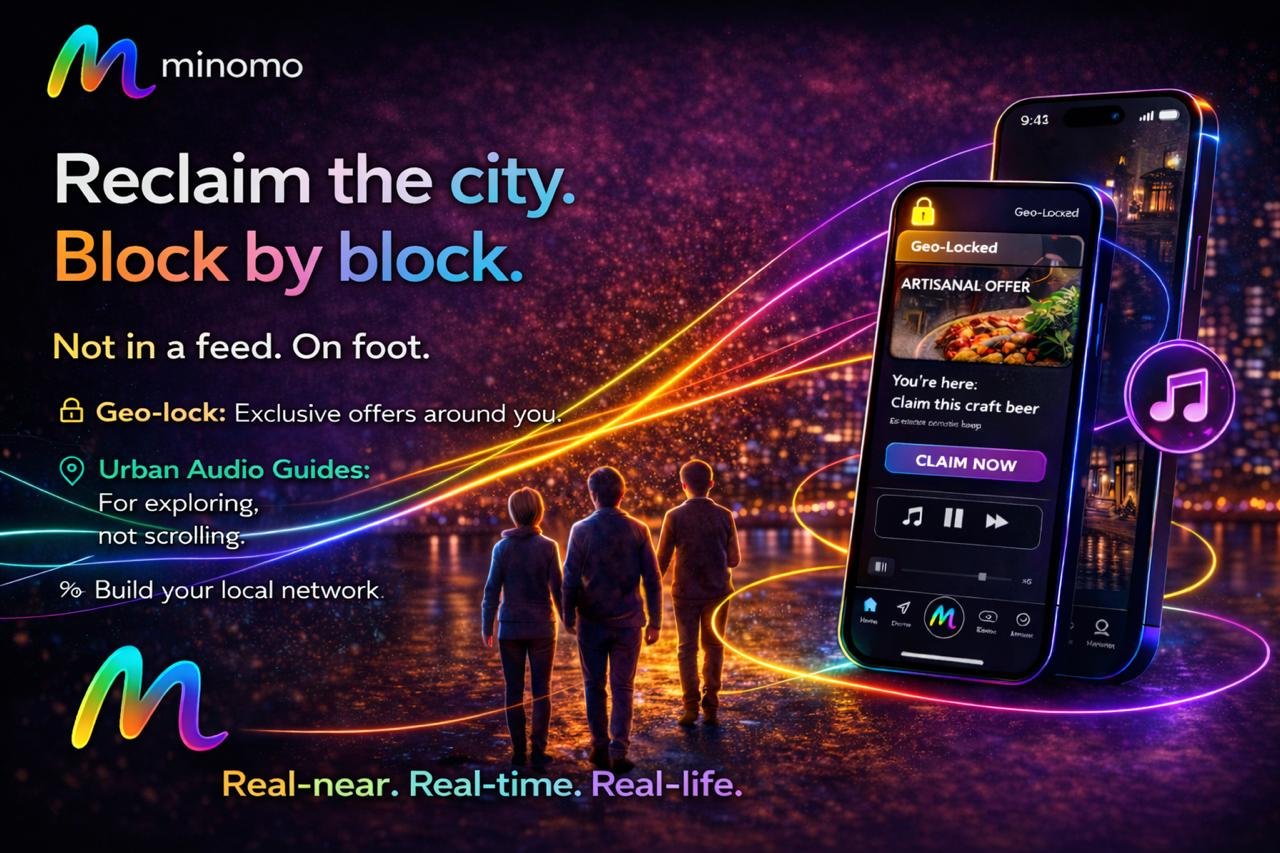
Geo-Lock: Value Exists Only in Presence
One of technology's most underappreciated failures is that it has severed physical context from experience.
You can "discover" a city from your couch. You can "visit" places without ever setting foot in them. But that frictionless accessibility has diluted real value into near-nothingness. Minomo works differently.
If you're not there, you don't see it.
Because real value only exists in physical presence.
Want an exclusive offer? You need to be in the venue. Want location-specific content? You need to be in that space. Technology stops isolating you and starts pushing you outward — into the world, into the street, into the city you've been scrolling past.
The End of the Rented Audience
The current marketing model is straightforward: you don't own your audience, you lease it. Minomo rewrites that contract.
We don't sell you visibility. We give you direct control over your own communication. We don't charge you for the permission to be seen by the people who already chose to find you. We monetize only real utility — through add-ons.
We don't take a cut of your revenue, because we don't own the transaction. You do.
Minomo is, at its core, a return to the public square. A space where technology is no longer a filter between you and your customers, but a bridge.
If you have to pay to be seen by your own city, that's not marketing anymore.
That's rent.
Minomo is a local engagement platform built around a single conviction: the most important relationship in commerce is the direct one. No intermediaries. No algorithms. No landlords.